
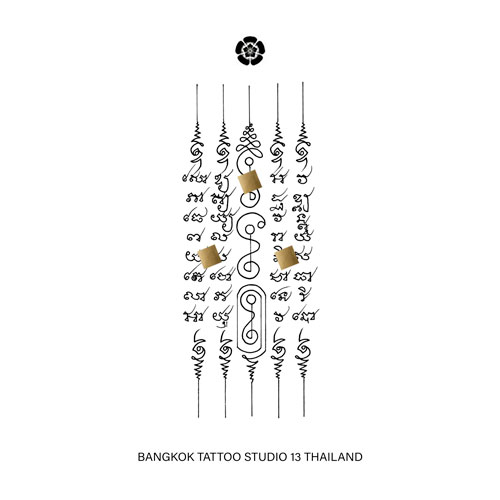
Takrud 5 rows
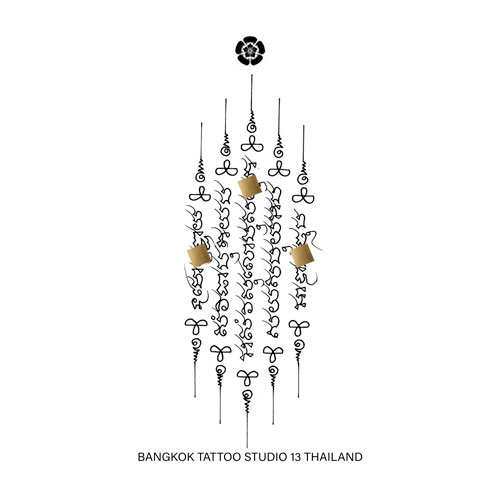
Takrud 5 rows
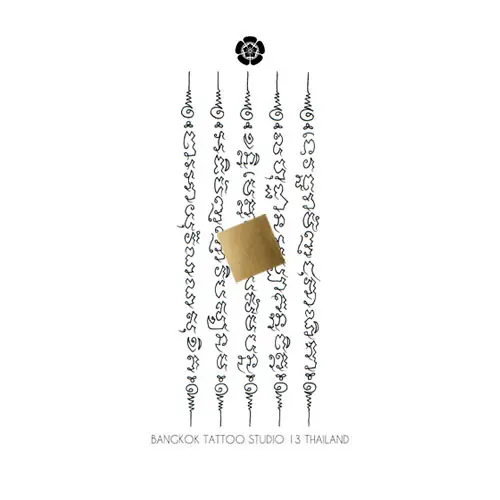
Meaning:
The Sak Yant Hah Taew, also known as the Five Rows Yantra,
is a traditional Thai sacred tattoo made of five lines of sacred script.
Each line contains a different Katha, or sacred mantra.
According to traditional belief, the Hah Taew is associated with protection,
good fortune, success, loving kindness and popularity.

Meaning:
The Yant Hah Taew Chat Petch combines the Five Rows Yantra
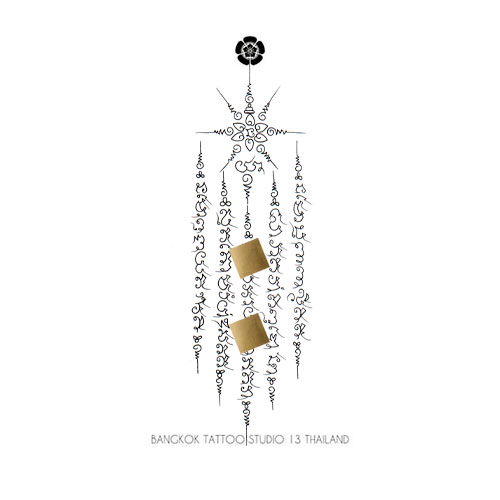
with the Chat Petch, also known as the Diamond Canopy Yantra.
The Five Rows contain sacred mantras traditionally associated
with protection, good fortune, success, loving kindness and popularity.
The Chat Petch is traditionally associated with prosperity,
business success, protection and support during difficult periods.
Together, these two yantras combine the blessings of the Five Rows
with the prosperity and protective symbolism of the Chat Petch.
Below is an English translation and edited version of a traditional Thai interpretation of the Hah Taew, also known as the Five Rows Yantra.
The Hah Taew is one of the most recognised Sak Yant designs in Thailand. Many people are drawn to it because it is traditionally associated with protection, good fortune, success, loving kindness and popularity.
Every line of the Hah Taew contains sacred script and has its own traditional meaning. It is not simply a tattoo for fashion; in Sak Yant tradition, the meaning of the script, the Ajarn, the lineage and the blessing ceremony are all important.
THE FIVE ROWS
1. THE FIRST ROW – HOME AND LIVING ENVIRONMENT
The first row is traditionally associated with protection of the home and living environment. It is believed to help with unfavourable conditions around a residence, including difficult feng shui conditions, a house located at a T-junction, a dead-end street, aligned doors or other negative influences connected with the place where a person lives.
2. THE SECOND ROW – DESTINY AND FORTUNE
The second row is believed to support the wearer’s destiny. It is traditionally associated with helping during periods of bad luck, difficult circumstances and unfavourable astrological influences.
3. THE THIRD ROW – PROTECTION FROM HARMFUL INFLUENCES
The third row is traditionally believed to protect against black magic, curses, harmful intentions, unwanted spirits and negative spiritual influences.
4. THE FOURTH ROW – SUCCESS AND GOOD FORTUNE
The fourth row is associated with good fortune and success. It is believed to support positive results in work, business, personal ambitions and everyday life.
5. THE FIFTH ROW – METTA MAHANIYOM
The fifth row is associated with Metta Mahaniyom, meaning loving kindness, charisma, popularity and goodwill from others. It is believed to help the wearer be well received by people, support successful communication and negotiation, and bring favourable results in business and trade.
TRADITIONAL RULES OF CONDUCT
In some Hah Taew traditions, the tattoo is accompanied by personal rules of conduct. These rules vary according to the Ajarn and lineage. The following principles are presented in the source text as rules for male wearers.
1. Respect your parents.
Do not physically harm, insult or speak in a way that causes pain or humiliation to your parents. This principle includes both actions and words.
2. Do not commit adultery.
Do not have a sexual relationship with someone who is married or in an existing committed relationship. If a person learns later that their partner is married, the source advises ending the relationship immediately.
3. Respect your teachers.
Do not insult, disrespect or act against teachers who have shared knowledge and skills with you, including the Ajarn who gave the tattoo.
According to the source text, the rule specifically stated for female wearers is to respect their parents and not harm or insult them.
Other rules sometimes found online, such as avoiding certain foods or not passing under a clothesline, bridge or house, are not included in this version of the source text as universal rules. Such practices may belong to particular Ajarns, local traditions or other yantra lineages.
The Hah Taew is a personal spiritual belief. Its sacred text, meaning, blessings and rules may differ according to the Ajarn, the lineage and the person receiving the tattoo. This page presents one traditional Thai interpretation and should not be understood as the only interpretation of the Five Rows Yantra.
Link:
kaijeaw.com


We do not claim to teach anyone or present one interpretation as the only truth.
We simply appreciate the history, culture and beliefs surrounding Sak Yant, and we share them with respect for the Thai masters and lineages that keep this tradition alive.
The Hah Taew, or Five Rows Yantra, is one of the most widely known Sak Yant designs.
It is traditionally made of five lines of sacred script, each line containing a different Katha, or sacred mantra, chosen and consecrated by an Ajarn.
According to traditional belief, the five rows are associated with:
protection of the home and living environment
support for the wearer’s destiny and protection from bad luck
protection from black magic, curses and harmful intentions
good fortune, success and positive results in work and ambitions
charisma, attraction, loving kindness and popularity
The exact sacred text, meaning and blessings of each row may differ according to the Ajarn, the lineage and the person receiving the tattoo.
Some masters adapt the Katha to the wearer’s personal circumstances, and some designs include additional yantras or symbols.
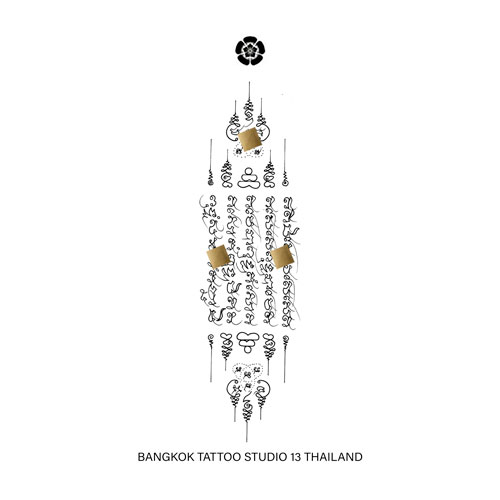
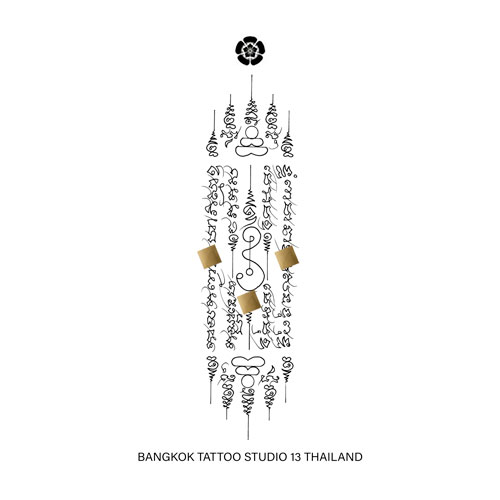
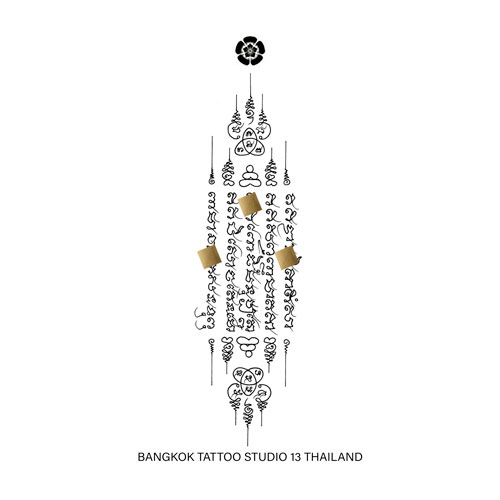
The images in this gallery show different Hah Taew designs, consecrated by different Ajarns and created in different styles.
Each one reflects its own lineage, script and artistic expression, while sharing the same core symbolism of the Five Rows.

Master Ajarn Noo Kanpai & Angelina Jolie
It is impossible to speak about the worldwide popularity of the Sak Yant Hah Taew, or Five Rows Yantra, without mentioning Ajarn Noo Kanpai.
Ajarn Noo Kanpai is one of Thailand’s most recognised Sak Yant masters. His version of the Five Rows Yantra became known in many countries and helped introduce traditional Sak Yant to an international audience.
"อ.หนู กันภัย" คืออาจารย์สักยันต์ผู้มีชื่อเสียง และเป็นผู้ที่ทำให้ยันต์ 5 แถวในรูปแบบของท่าน เป็นที่รู้จักในหลายประเทศทั่วโลก
Ajarn Noo Kanpai is a respected Sak Yant master whose version of the Five Rows Yantra became known in many countries around the world.
WHAT MAKES THE 5 ROWS YANTRA SO POPULAR?
The worldwide popularity of the Hah Taew grew after Angelina Jolie received the Five Rows tattoo from Ajarn Noo Kanpai in 2003.
ความโด่งดังของยันต์ 5 แถว ส่วนหนึ่งเกิดจากแองเจลินา โจลี มาสักกับอาจารย์หนู กันภัย และเป็นจุดเริ่มต้นที่ทำให้คนทั่วโลกสนใจสักยันต์มากขึ้น
Angelina Jolie’s tattoo helped introduce the Five Rows Yantra to people around the world. Media coverage created international interest in Sak Yant and in the work of Thai tattoo masters.
WHERE DO THE CHARACTERS ON THE 5 ROWS YANTRA COME FROM?
According to the tradition associated with Ajarn Noo Kanpai, the sacred characters on the Five Rows Yantra are connected to important events in the life of the Lord Buddha: his birth, enlightenment and final passing into Parinirvana.
อักขระบนยันต์ 5 แถว เกิดจากการถอดอักขระมาจากดวงประสูติ ตรัสรู้ และปรินิพพานขององค์สมเด็จพระสัมมาสัมพุทธเจ้า
The upper row is associated with the Buddha’s birth. The sacred characters are arranged according to traditional yantra knowledge to create the Five Rows Yantra.
โดยดวงประสูติจะอยู่สูงสุด เอาวัน เดือน ปีเกิดขององค์พระสัมมาสัมพุทธเจ้า มาแปลเป็นยันต์ 5 แถว เพื่อผูกยันต์ตามตำราโบราณ
WHAT ARE THE BENEFITS OF EACH ROW?
The Five Rows Yantra is traditionally described as a yantra for supporting luck, improving fortune and attracting prosperity.
ยันต์ 5 แถว = ยันต์หนุนดวง / ยันต์โภคทรัพย์
Each line has its own traditional meaning and blessing. The exact sacred text, interpretation and spiritual purpose may vary according to the Ajarn, lineage and person receiving the tattoo.
Ajarn Noo Kanpai helped make the Five Rows Yantra widely known through his work with Angelina Jolie and other public figures. International media attention introduced this traditional Thai yantra to a much wider audience.
Today, the Hah Taew is one of the most recognised and most requested Sak Yant designs in Thailand.
Source:
blockdit.com