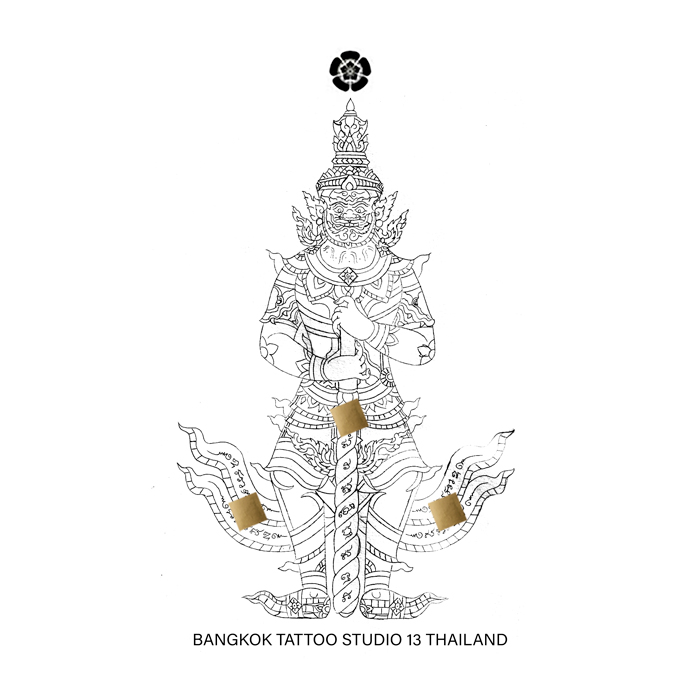
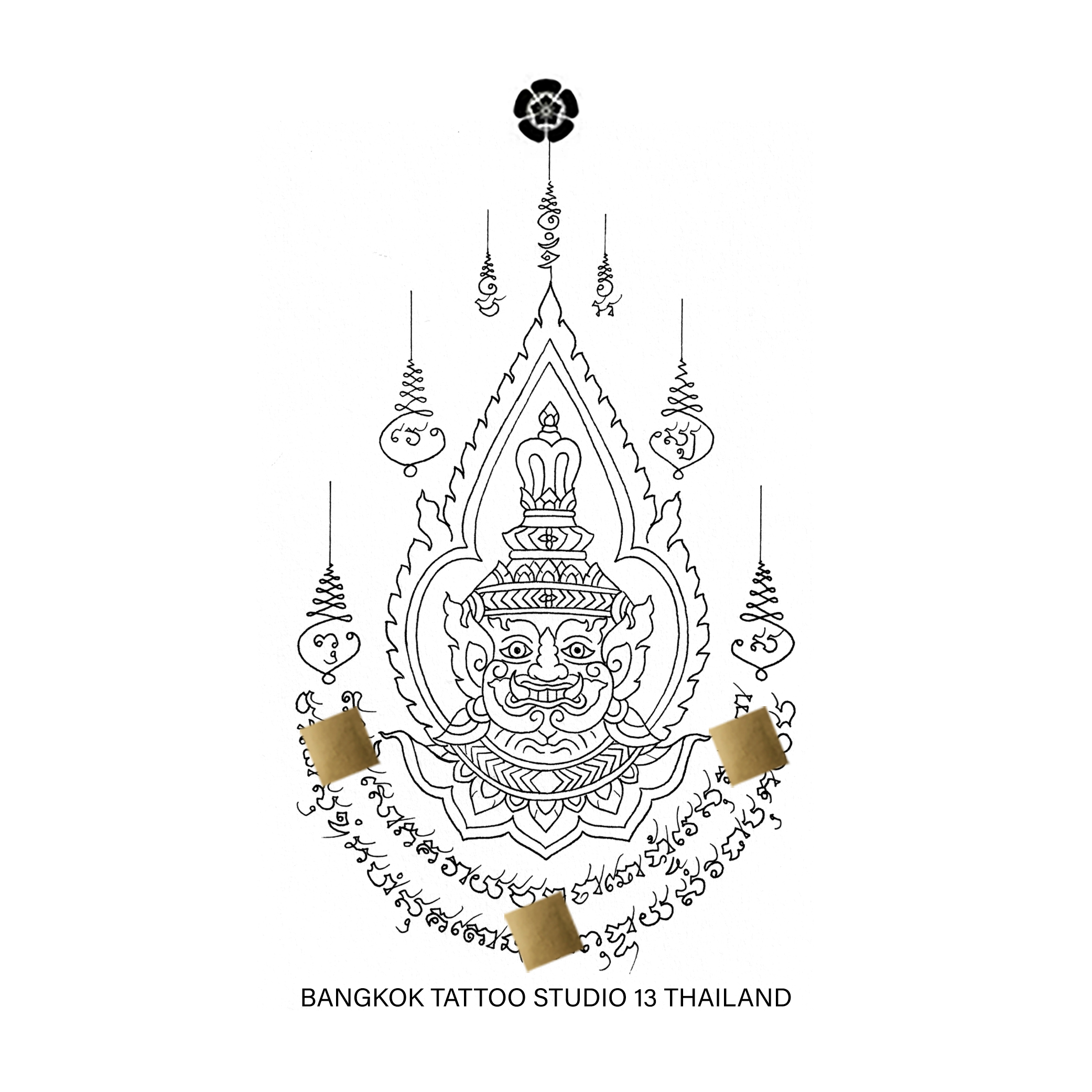
The History of the Yak (ยักษ์)
The Thai word ยักษ์ (Yak) comes from the Sanskrit word Yaksha (यक्ष) and the Pali Yakkha.
In Hindu, Buddhist and Jain traditions, Yakshas were supernatural beings associated with
nature, forests, rivers, mountains, fertility and hidden treasures.
Over time, they also became powerful guardians of temples, sacred sites and religious treasures.
ยักษ์ (Yak) = Giant, ogre or mythological guardian.
ยันต์ยักษ์ (Yant Yak) = Sacred Yaksha yantra.
สักยันต์ยักษ์ (Sak Yant Yak) = Sacred Thai Yaksha tattoo.
In Thailand, the Yaksha was integrated into Buddhist and local Thai traditions.
Although Yakshas are often shown with fierce expressions, they are not necessarily evil.
Their intimidating appearance serves a protective purpose: to repel harmful forces and
prevent danger from entering sacred places.
Thai Yakshas are especially well known through the Ramakien, the Thai version of the Indian Ramayana.
Many of the imposing figures seen at temple gates and palace entrances represent characters from this epic.
The giant guardians at Wat Phra Kaew, for example, stand watch over the temple grounds and
are connected with the stories of the Ramakien.
The Yaksha is traditionally associated with:
- protection of Buddhist temples and sacred gates;
- guardianship of the Dharma, or Buddhist teachings;
- defence against demons, evil spirits and harmful forces;
- protection of treasures and prosperity;
- strength, authority and supernatural power.
This is why large Yak statues are commonly placed at the entrances of Thai temples.
They act as symbolic guardians between the ordinary world and the sacred space,
watching over visitors and keeping negative influences away.
Symbolism of the Sak Yant Yak
Within a Sak Yant, the Yaksha becomes a spiritual guardian carried by the wearer.
Its fierce face and powerful posture symbolize the ability to confront danger,
resist harmful influences and remain strong during difficult periods.
Traditionally, the Sak Yant Yak is associated with:
Protection
The Yaksha represents a guardian against danger, negative influences, curses and harmful intentions.
Courage
Its imposing presence symbolizes the bravery to face challenges without surrendering to fear.
Inner Strength
The Yaksha reflects mental stability, resilience and determination during times of pressure or uncertainty.
Authority
The design is connected with respect, leadership, personal influence and a commanding presence.
The Yaksha should therefore not be understood simply as an evil ogre.
In Thai religious art and mythology, it is a powerful guardian whose frightening appearance serves a protective role.
For someone choosing a Sak Yant Yak, the design can represent strength used responsibly, courage guided by awareness and protection directed toward what matters most.