ยันต์พญาหงส์ทอง
Meaning:
Sak Yant Phaya Hong Thong Bird
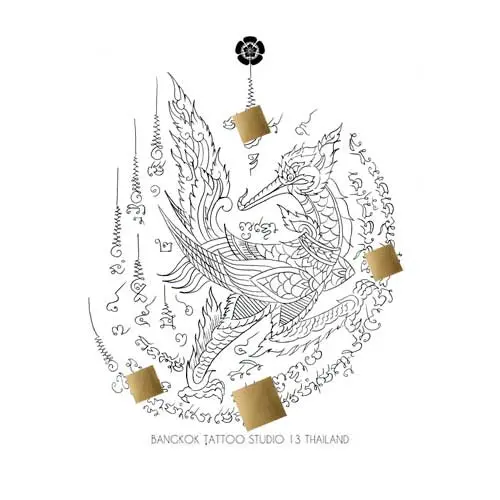
This Yant is traditionally believed to help the wearer become loved and admired by others.
The single bird is looking back, creating a graceful and elegant composition. Its posture may symbolise awareness, reflection and the ability to remain attentive to people and opportunities around it.
The Phaya Hong Thong is traditionally associated with charm, beauty, kindness, popularity and successful communication. It may be especially suitable for people who wish to attract goodwill and create a positive impression
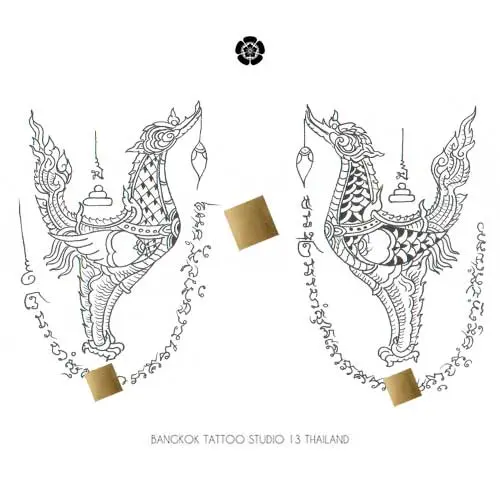
ยันต์พญาหงส์ทอง
Meaning:
Phaya Hong Thong is traditionally associated with mercy,
loving-kindness and great popularity.
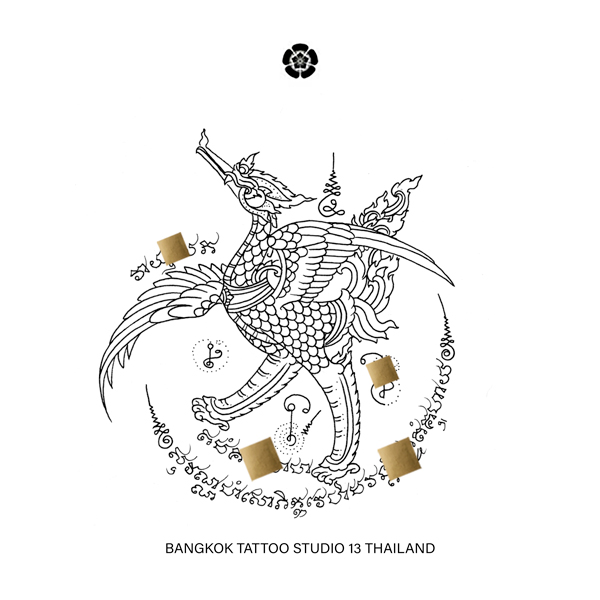
This charm is believed to help the wearer become loved, admired and well received by others.
The design features a single bird looking upward in a natural and graceful posture.
Its raised gaze may symbolise aspiration, dignity, confidence and the pursuit of good fortune.
ยันต์พญาหงส์ทอง
Meaning:
Phaya Hong Thong is traditionally associated with mercy, loving-kindness and
great popularity.
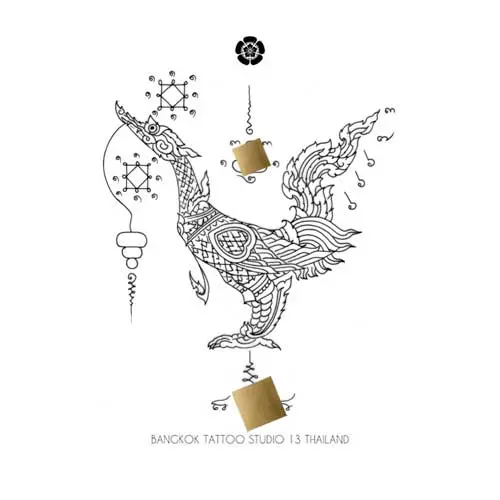
This charm is believed to help the wearer become loved and admired by others.
The design features a single bird holding a thread that extends downward. Three oval-shaped elements appear at the bottom of the design, adding a spiritual and symbolic quality to the yantra.
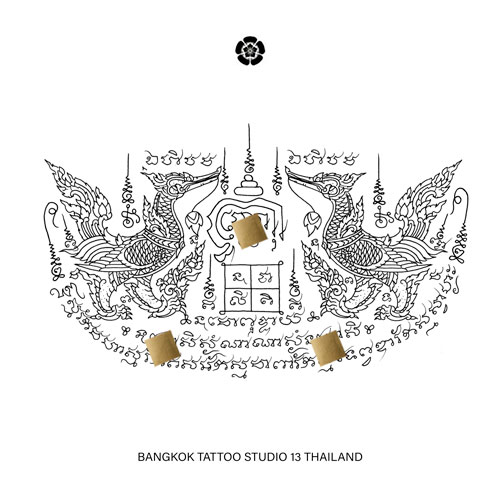
ยันต์พญาหงส์ทองคู่
YANT 2 BIRDS PHAYA HONG THONG KOO
Modern Version
Main Symbolism: Love, loyalty and relationship balance.
This modern design features two Phaya Hong Thong birds.
Together, they symbolise a loving and balanced relationship, mutual loyalty and emotional harmony.
The paired birds represent companionship, trust and a strong connection between two people. Their elegant form also reflects beauty, dignity and the wish to maintain a peaceful and lasting relationship.
As a modern version, the exact meaning may vary according to the design and the intention of the wearer.
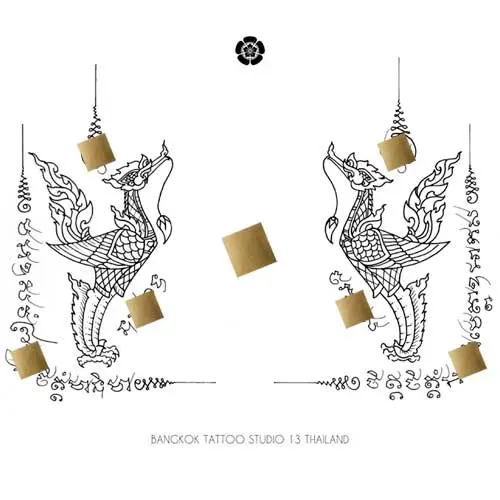
Modern Version
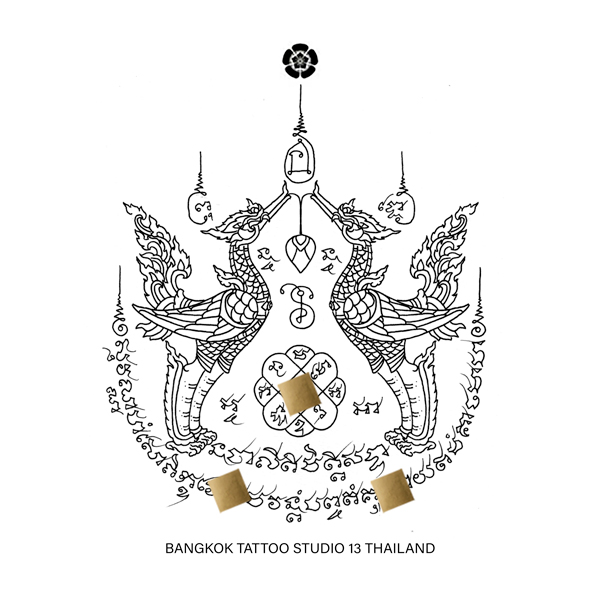
This modern design features two Phaya Hong Thong birds, with additional yantra elements placed between and below them.
The two birds may symbolise love, loyalty, harmony and balance within a relationship. However, the exact meaning of the central and lower yantra elements depends on the sacred script and the tradition from which the design comes.
For this reason, this version is best described as a modern custom composition inspired by Phaya Hong Thong Koo, rather than as a traditional yantra with one confirmed meaning.
Version 2
Main Symbolism: Love, loyalty and relationship balance.
Version 3
Main Symbolism: Love, loyalty and relationship balance.
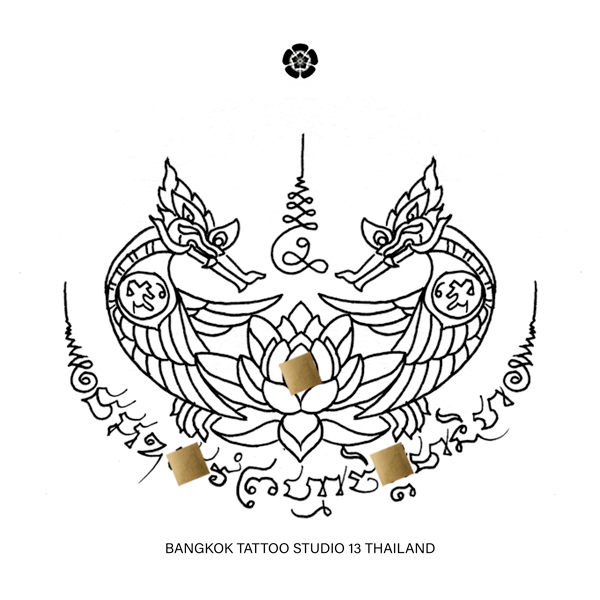
Modern Version
This modern design features two Phaya Hong Thong birds forming an almost heart-shaped composition.
Their heads turn towards the centre, with a lotus flower placed between them.
The two birds symbolise love, loyalty, harmony and balance within a relationship.
The lotus represents purity, beauty, spiritual growth and inner peace.
Together, the birds and the lotus create a symbol of affection,
emotional connection and a harmonious relationship.
1. Phaya Hong Thong Alone, Looking Back
(หงส์ทองหันหลัง)
Main Symbolism:
Vigilance, wisdom drawn from the past and protection against betrayal.
Interpretation:
This position evokes a noble and wise being who moves forward in life
while remaining aware of the past and learning from experience.
It may also symbolise protection from hidden threats coming from behind,
such as hidden enemies, jealous people or traitors.
Associated Powers According to Traditional Belief:
Protection against betrayal, karmic awareness and heightened intuition.
2. A Bird with Its Head Raised Upward
(หงส์ทองเชิดหัวขึ้น)
Main Symbolism:
Pride, lofty ambition and divine blessings.
Interpretation:
The bird raises its head towards the sky, symbolising the pursuit of
spiritual elevation, nobility of soul and greatness.
It represents a person who wishes to be respected and admired and to
reach higher levels in life, whether in their career or spiritual development.
Associated Powers:
Reputation, charisma, good fortune and public recognition.
3. Phaya Hong Thong Koo, Two Birds Facing Each Other
(พญาหงส์ทองคู่)
Main Symbolism:
Love, loyalty and balance within a relationship.
Interpretation:
Two Phaya Hong Thong birds facing each other represent union and harmony.
They are often associated with fidelity, mutual respect and balance within a couple.
This design may be particularly meaningful to people who wish to attract a
stable romantic relationship or strengthen an existing one.
Associated Powers:
Attraction, fidelity, harmony within marriage and romantic charisma.
The Royal Golden Swan
Long ago, in the celestial realms beyond the golden clouds,
there lived a noble being among winged creatures: Phaya Hong Thong, the King of the Golden Swans.
He was no ordinary bird.
His plumage shone like pure gold, his outstretched wings seemed to shake the sky,
and his song was so melodious that it could appease even the gods.
Phaya Hong Thong was said to reside in a realm invisible to human eyes, a place of purity and
peace called Himmapan, the mystical forest where celestial creatures, nagas, kinnaris and legendary animals coexist.
A Messenger Between Worlds
Wise men say that Phaya Hong Thong was a messenger of the heavens,
sent by the deities to observe the human world and report acts of kindness and justice.
According to the legend, he sometimes appeared in the form of a man dressed in gold,
walking along dusty roads to test the virtue of kings and the compassion of ordinary people.
On one of his journeys, he descended to the banks of the Mekong River and met a
pure-hearted princess named Nang Mali. Despite her father’s prohibitions, she offered food to the poor.
Moved by her kindness, Phaya Hong Thong revealed his true form to her.
With a single flap of his wings, he caused golden flowers to rain over the kingdom, bringing peace and prosperity.
The Symbol of Elevation
Phaya Hong Thong is not only a king among birds.
He symbolises the elevation of the soul, purity of heart and the path of dharma, or righteous conduct.
His flight represents not domination, but balance between heaven and earth.
According to this symbolic tradition, he touches the ground only in blessed places.
When a golden swan appears in a dream, it may be interpreted as an omen of nobility,
spiritual renewal or positive change.
Heritage in Thai Culture
In Thai art, classical dance and literature, the Hongsa is often depicted as a celestial creature or guardian figure.
It is also associated with Brahma, the creator god in Hinduism, whose vehicle is the hamsa,
often represented as a swan or goose.
This reinforces the connection between the Hongsa and the celestial realms.
A Living Legend
Even today, some people in Thailand and Laos may tell children that when a majestic bird crosses the sky at dusk,
it could be Phaya Hong Thong, watching over those who live with righteousness and kindness.